
Executive summary: four key themes
Growth in digital banking. Technology at the mega-banks has transformed their customer experience and shifted consumer and business transaction volume to digital and mobile channels. This transformation was accelerated by the pandemic and forces other banks to invest in digital banking. Community banks need to develop a digital strategy as a priority.
Dramatic reduction in many banks' consumer fee income. The pandemic changed consumer spending and payment patterns. As consumers moved to contactless payments, check, cash, and ATM volume fell, while person-to-person and person-to-business volume rose. ACH transactions also rose. These channels generate lower deposit service fees. Lower consumer spending and shifts toward low-interchange categories reduced card fees. At the mega-banks these categories are buried among others, since fee income is often as large as net interest margin, but at community banks deposit service fees and card fees are critical. Loss of this income is pressuring regional and community banks to pursue additional sources of fee income such as mortgage origination.
Determining the right loss allowance. Loss provisioning is always difficult, but the pandemic made it nearly impossible. Most banks boosted provisions for the first and second quarters, then reversed some of it by the fourth, before there was enough data on how loan portfolios would actually perform. The result is larger than normal variation in loss allowance across banks. Community banks should stress test their portfolios and develop contingency plans for loans that may end up in workout. Some are likely to outsource that activity.
Deferral and loan modification activity. Banks seek public relations benefit by highlighting actions like deferrals that help customers through the pandemic. At the same time they demonstrate that deferral activity is infrequent and unlikely to have a material impact on credit quality: having their cake and eating it too. Other borrower-friendly activities like modifications have largely gone unreported, though modifications are having an even bigger impact on performance. When these modifications must be reported as troubled debt restructurings, and hence largely cease, what will happen to delinquency performance?
The rise of digital
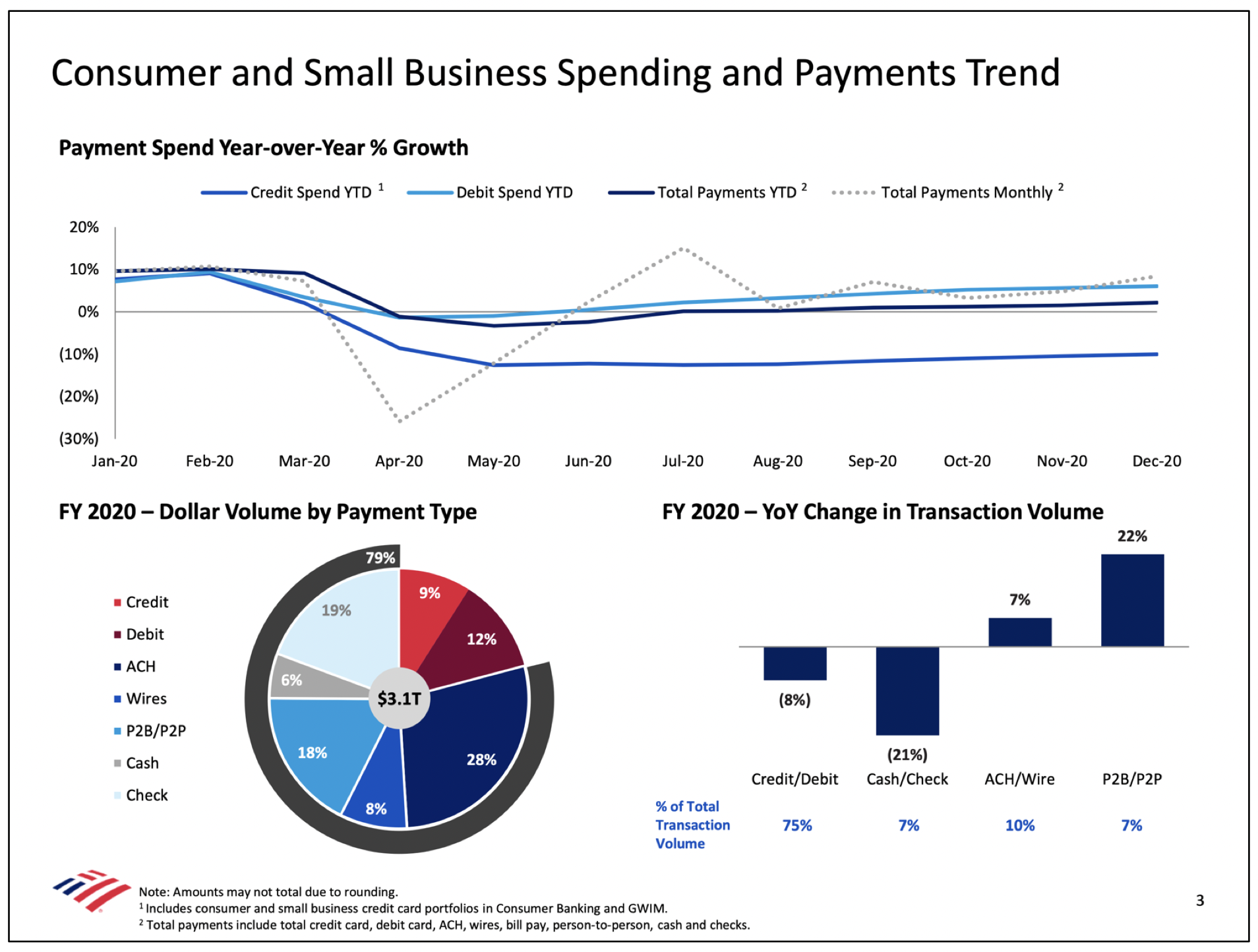
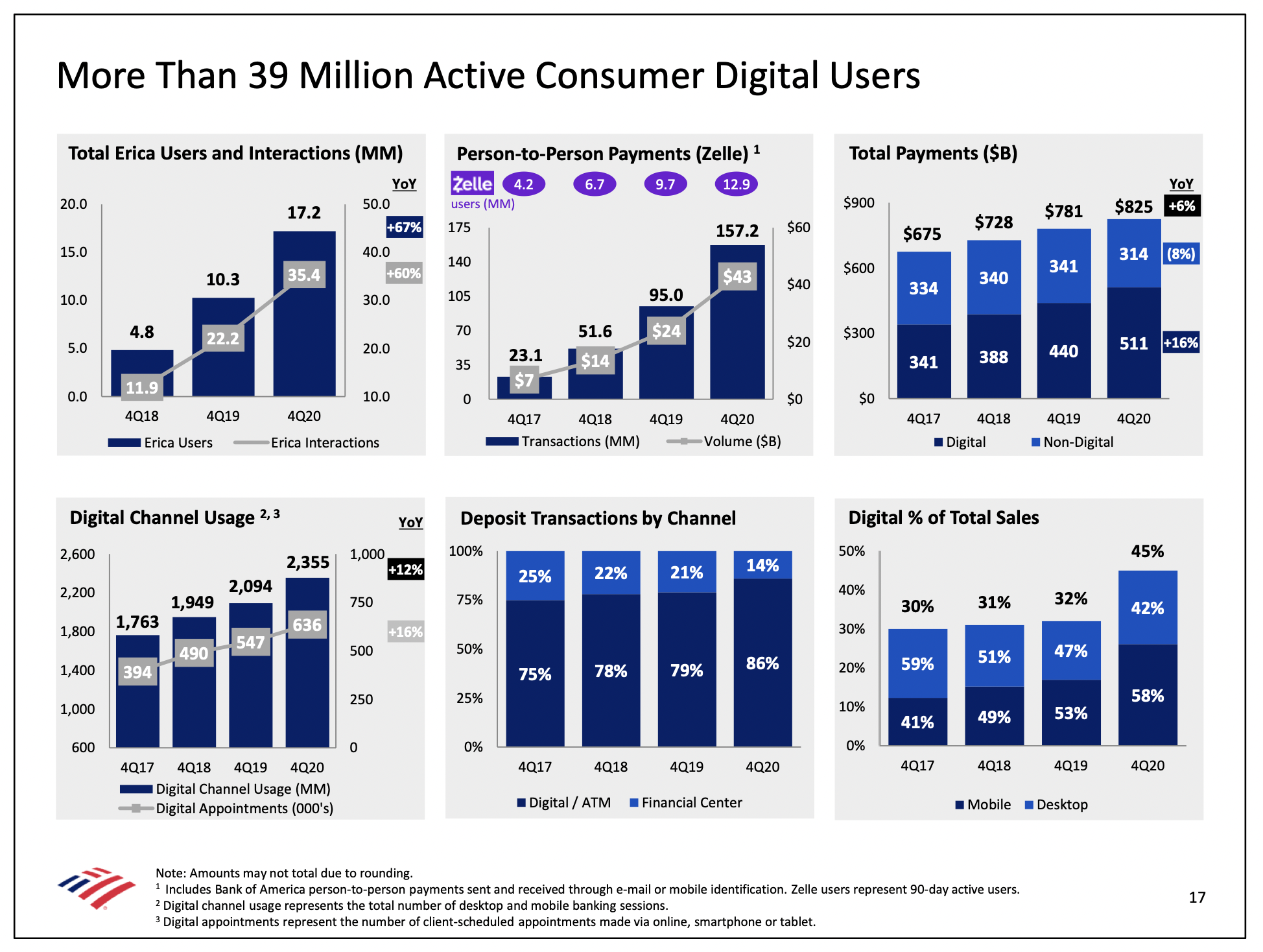
Bank of America's digital payments, at 18 percent, are fast approaching check at 19 percent and card payments at 21 percent. The pandemic accelerated changes to consumer payment preferences. Remote payment transaction volume, whether online or mobile, and whether person-to-business or person-to-person, jumped 22 percent year over year, whereas cash and check payments fell 21 percent. Other banks do not disclose data on payments by type but appear to match or exceed Bank of America. Chase's technology spend is about $5 billion, half of non-interest expense investments, and digital engagement is at 69 percent for consumer banking and 86 percent for business banking.
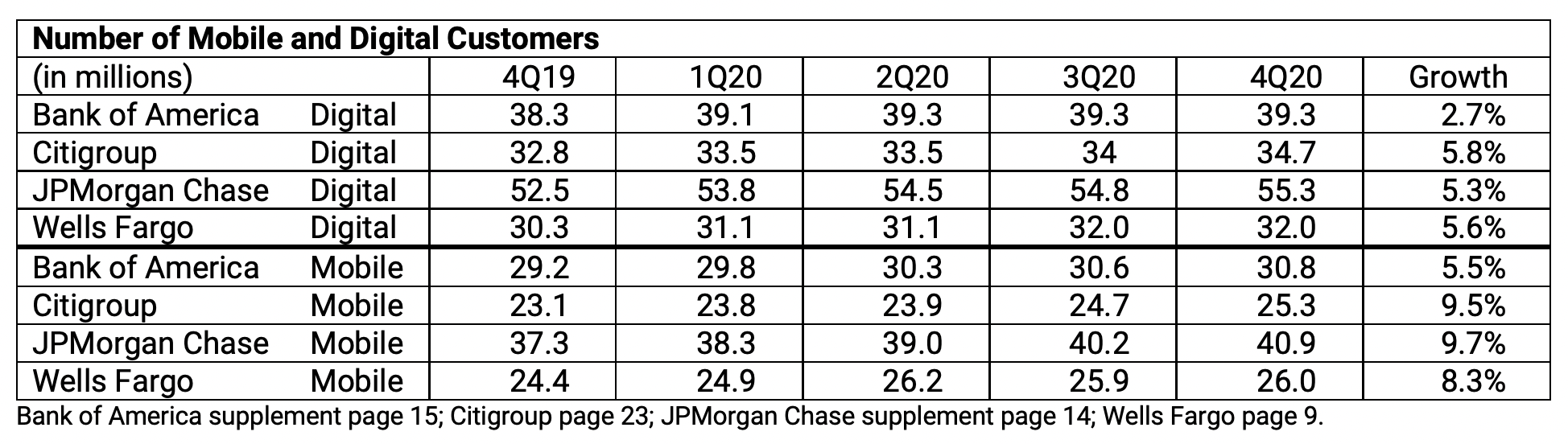
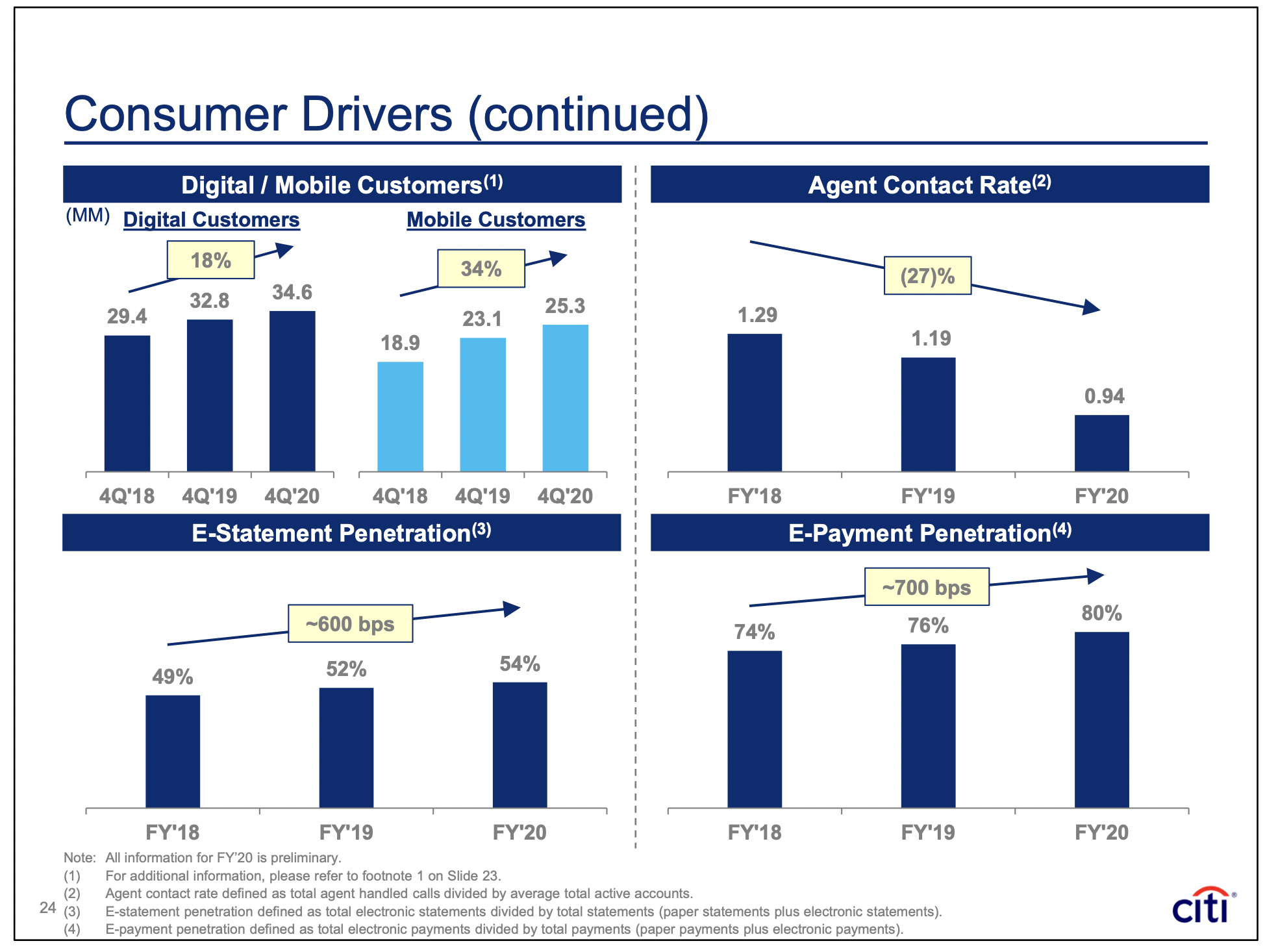
Digital and mobile customer growth continues, albeit at slower rates than transactions. The number of digital and mobile customers shows modest increases in 2020, but this does not tell the whole story. Digital and mobile transaction activity is up far more.
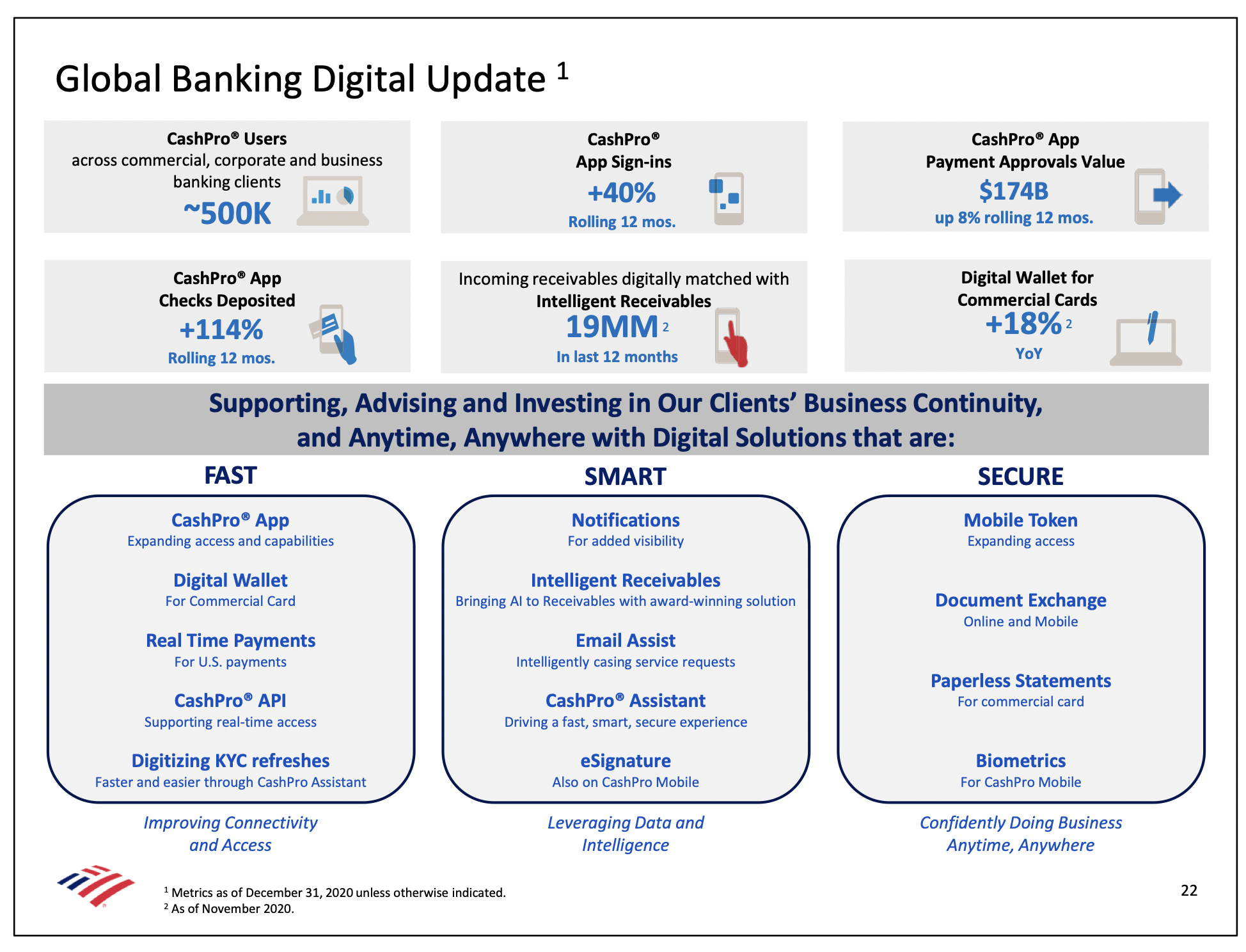
Even Citigroup, which normally focuses on performance by geography and other macro drivers, presents data about the shift in consumer preference toward digital banking.
Reduced fee income
Key sources of fee income are falling as consumer spending falls and shifts to other channels. The mega-banks have the luxury of diverse sources of fee income, including investment banking, trading, and asset management, that community and regional banks do not, so fees often match net interest margin. Key sources for those smaller banks are deposit service fees and card services. Both categories fell during 2020, about 20 percent for deposit fees and 3 to 5 percent for card fees.
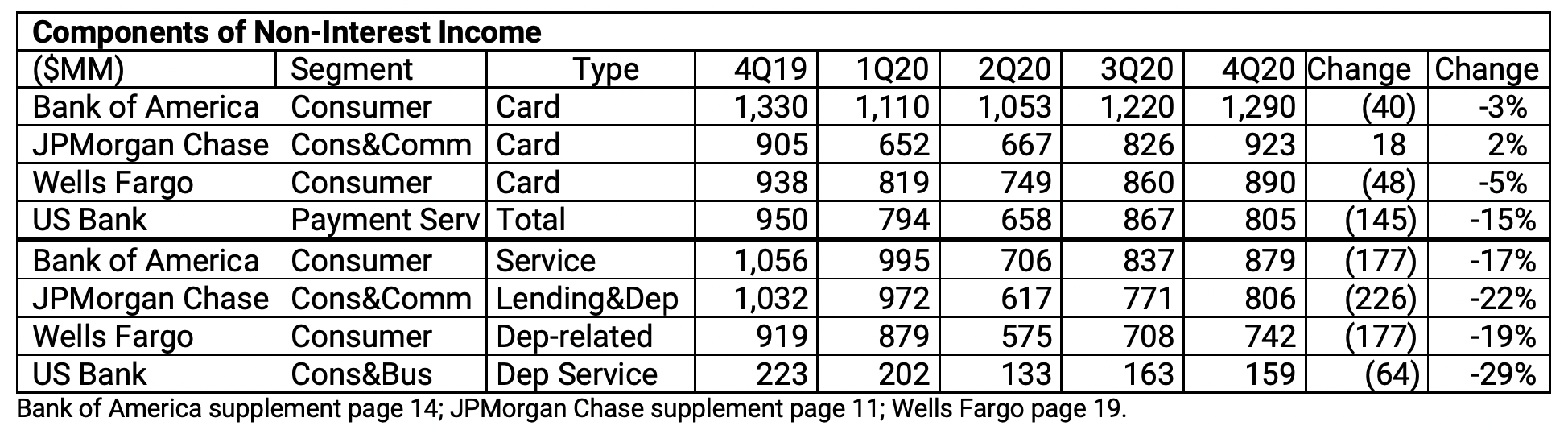
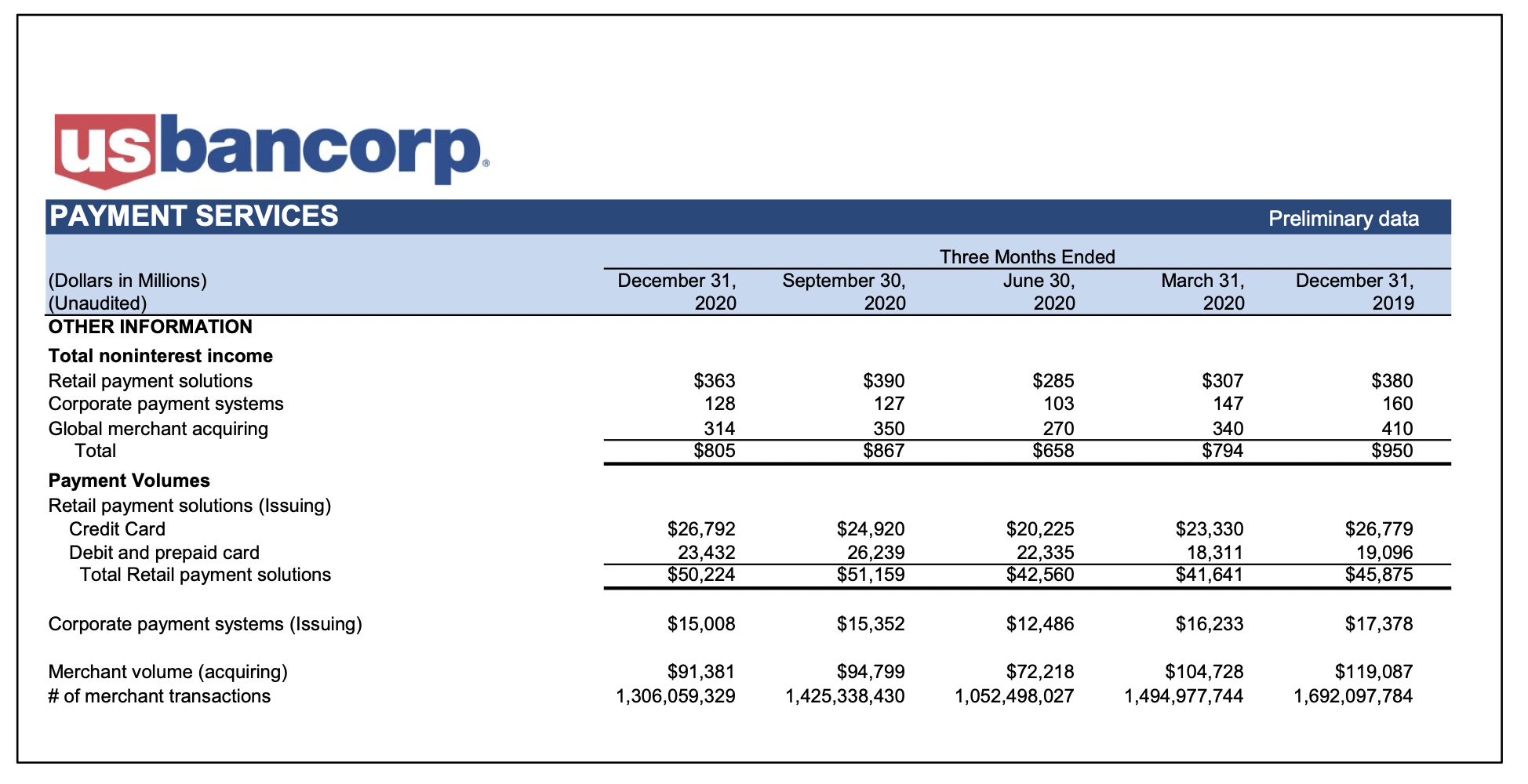
These fee categories are critical for most community banks, even though they gain scant attention at diversified banks. At US Bank, however, Payment Services is reported as a separate segment, and its non-interest income fell from $950 million in the fourth quarter of 2019 to $658 million in the second quarter of 2020, a drop of 31 percent, before recovering to $805 million in the fourth quarter, still down 15 percent. That is enough to get everyone's attention.
Pandemic-related loss provision
Most banks took large provisions in the first and second quarters but none in the fourth. When pandemic lockdowns started in March, most banks took a large provision, roughly five times normal, for potential loan losses. As the year progressed into the second quarter, with little information about the true credit performance of the portfolio, banks took an even larger provision. Provisions fell back to normal in the third quarter and then to none or negative for the fourth.

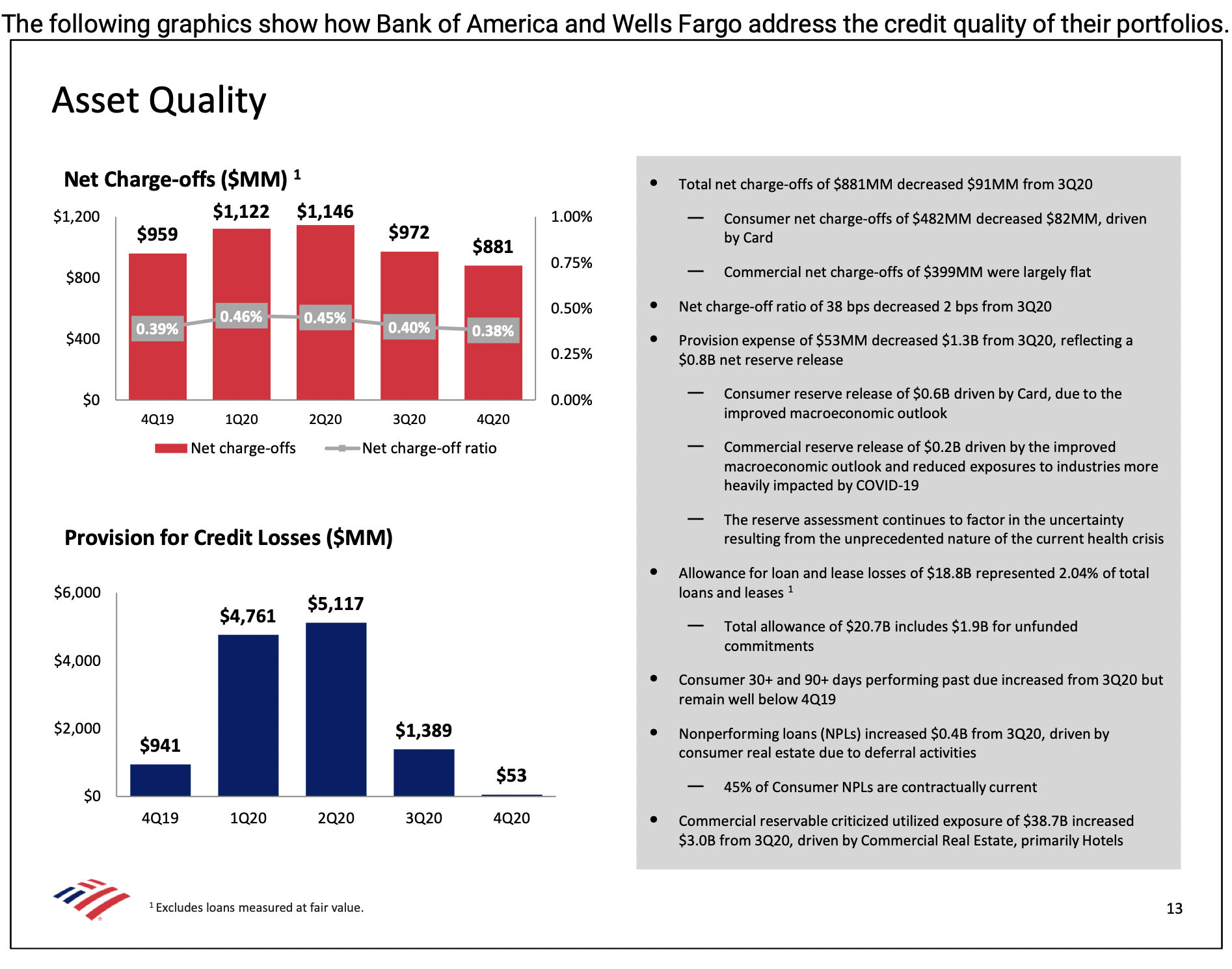
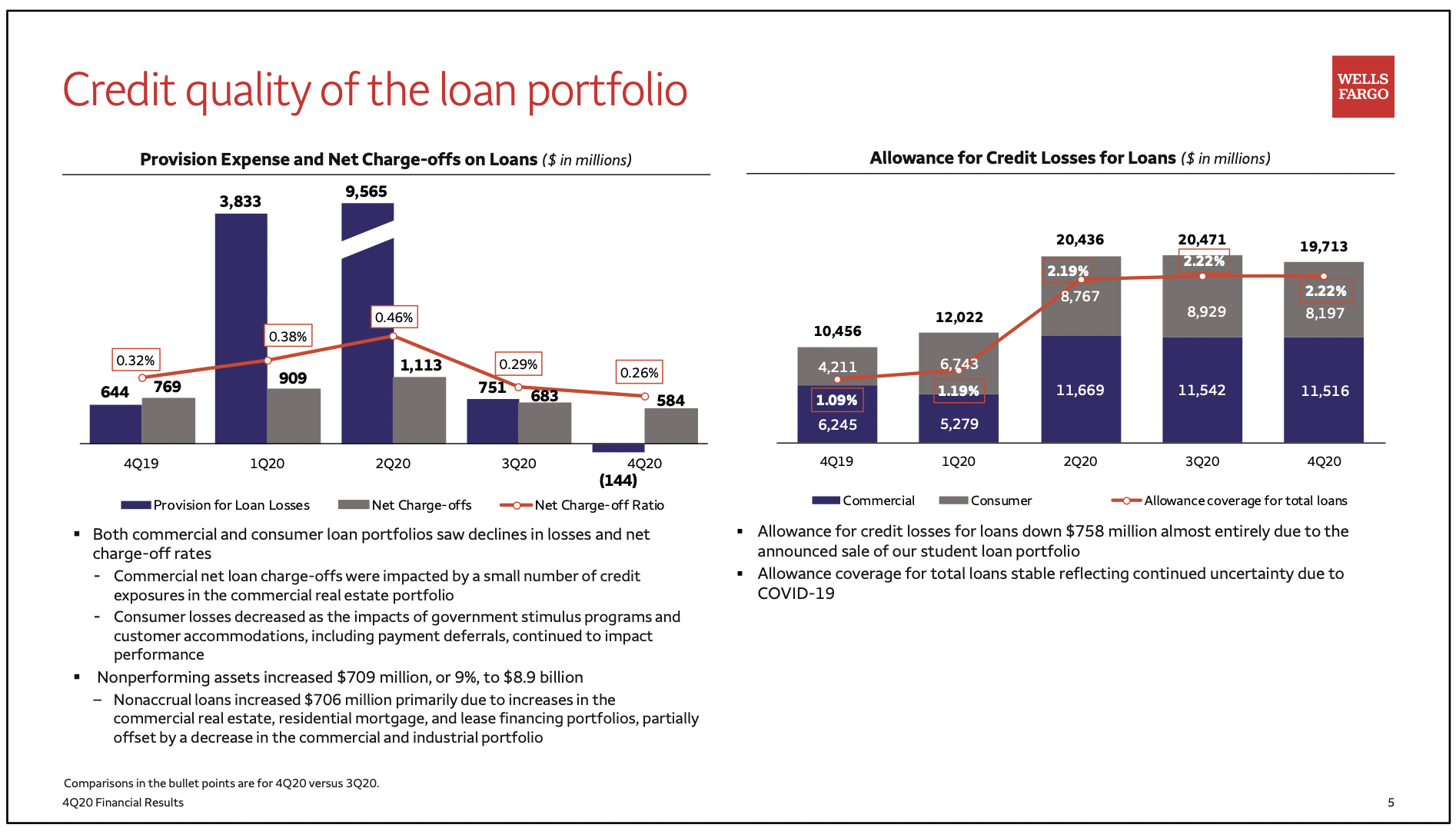
Changes to banks' loss reserves, while material, may not cover real exposure. Loss provision depends on total reserve needs at the end of the period and net charge-off activity during the period. Considering all of the government-sponsored forbearance activity, it is not surprising that charge-offs did not increase in 2020. In fact consumer charge-offs actually dropped quarter by quarter as the year progressed. Bank of America notes that credit card delinquencies declined from March through July, driven by loan deferrals and government stimulus. That is, the bank did not take charge-offs, the borrower did not catch up on payments, and delinquencies declined because of deferrals.
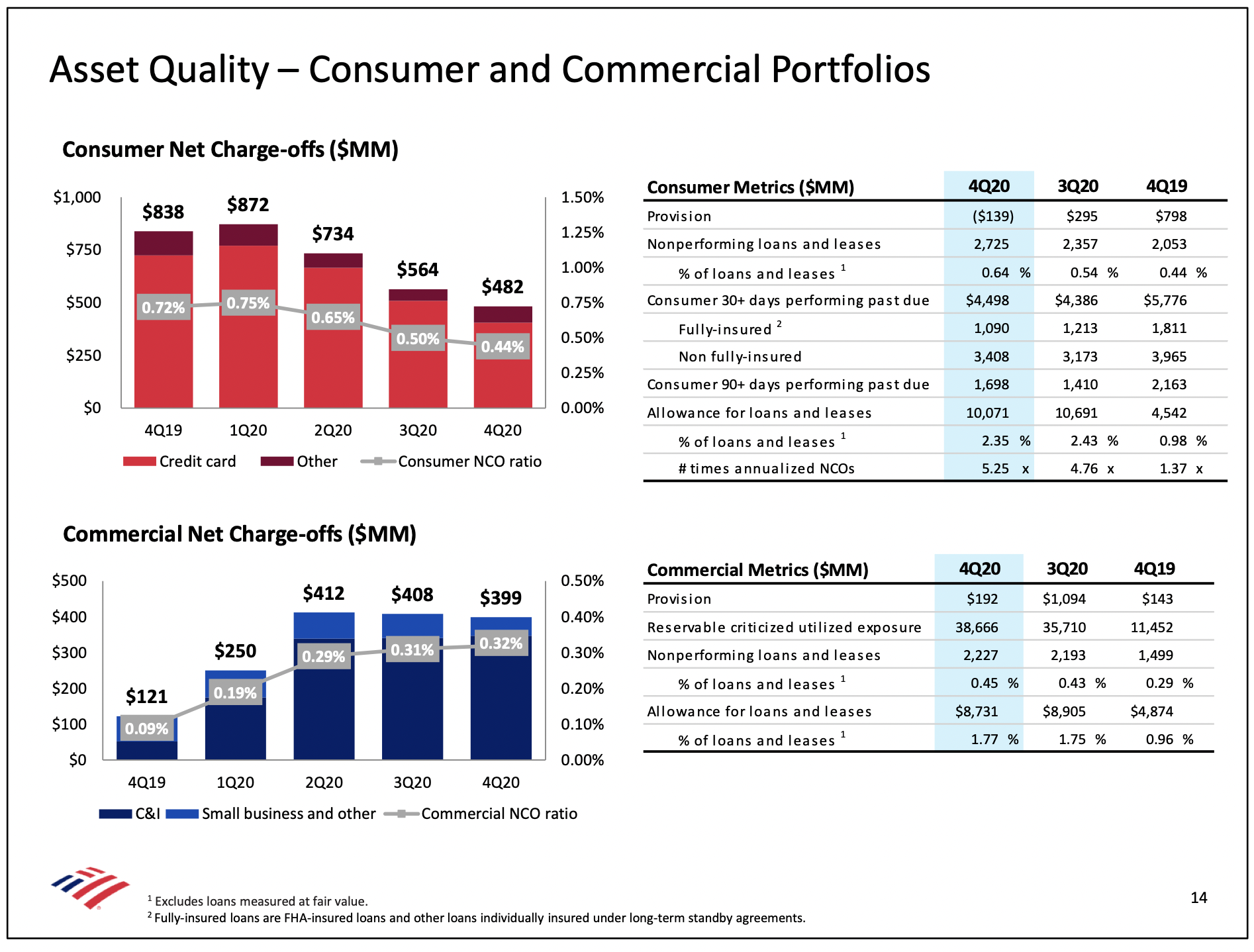
What will happen to credit performance? The most important questions are what happens as the pandemic economy continues, and how borrowers catch up when deferrals end. Bank of America's allowance on consumer loans rose from 0.98 percent as of December 2019 to 2.35 percent as of December 2020, increasing its cushion by 1.37 percent. Is that enough? Too much? It is impossible to know. On the commercial side the allowance rose from 0.96 percent to 1.77 percent during 2020. Is that extra 0.81 percent going to be enough?
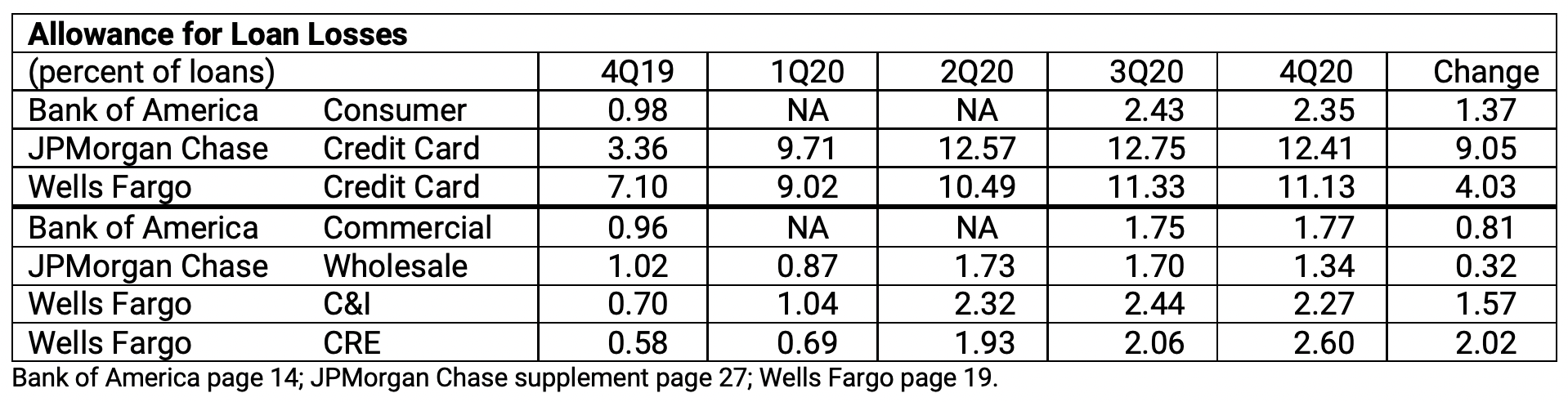
Enhanced granularity provides more comfort but cannot answer the enough-or-too-much question. Wells Fargo does a good job of showing how its loss reserves are allocated across the portfolio, but it is impossible to know whether 11.13 percent for credit cards will be enough, or 2.27 percent for commercial and industrial, or 2.60 percent for commercial real estate. Chase's total wholesale loan allowance barely rose, so Wells looks strong by comparison. Only time will tell which reserve is the right amount.
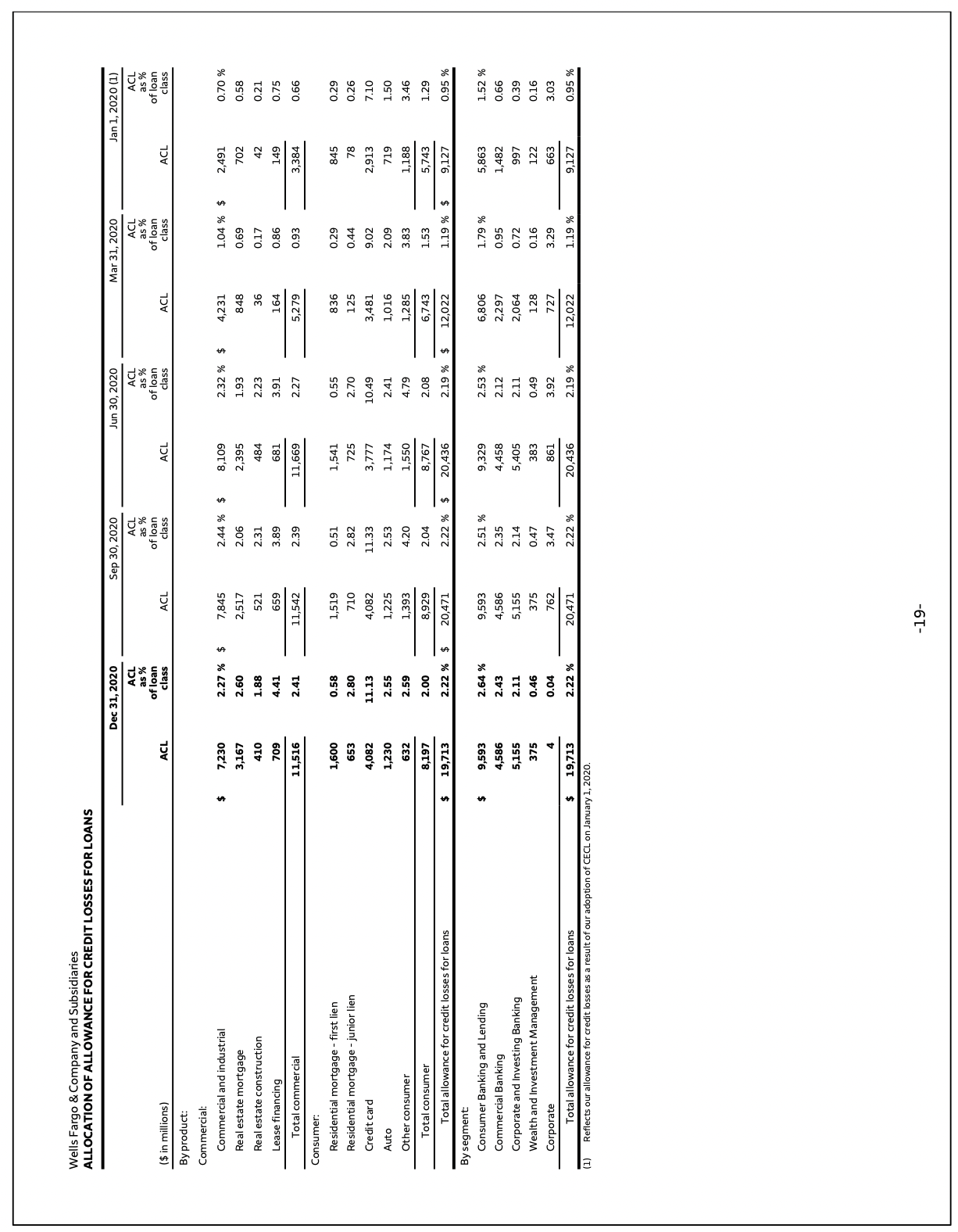
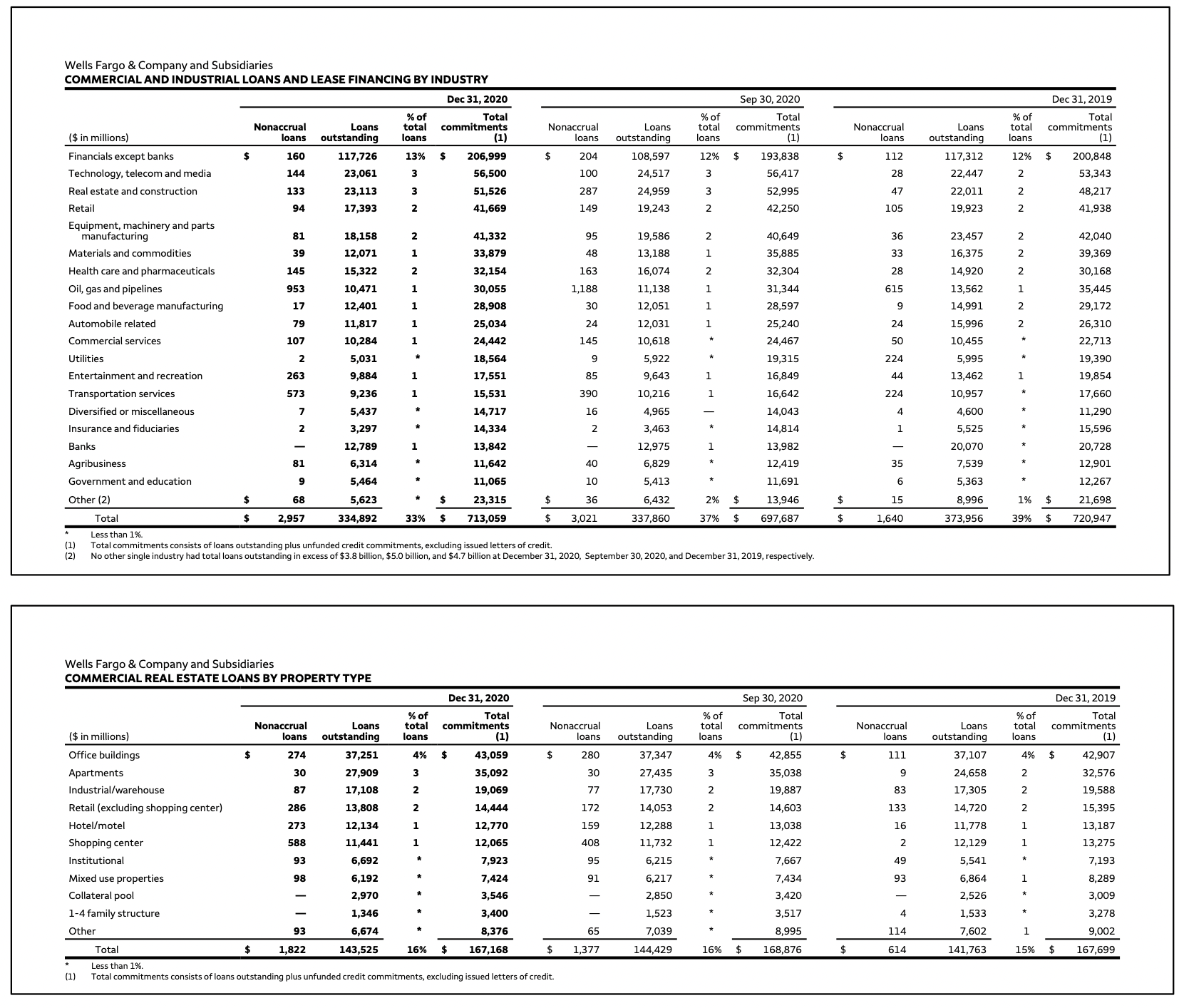
Industry-specific information about troubled loans in Wells Fargo's commercial and industrial and commercial real estate portfolios does not explain changes in the allowance. Nonaccrual loans are now almost identical to December 2019 levels, when the allowance was 31 percent and 22 percent of its current level. Clearly banks are not moving loans to nonaccrual, perhaps because deferrals and loan modifications are enough to keep those loans current for the time being.
Deferral activity
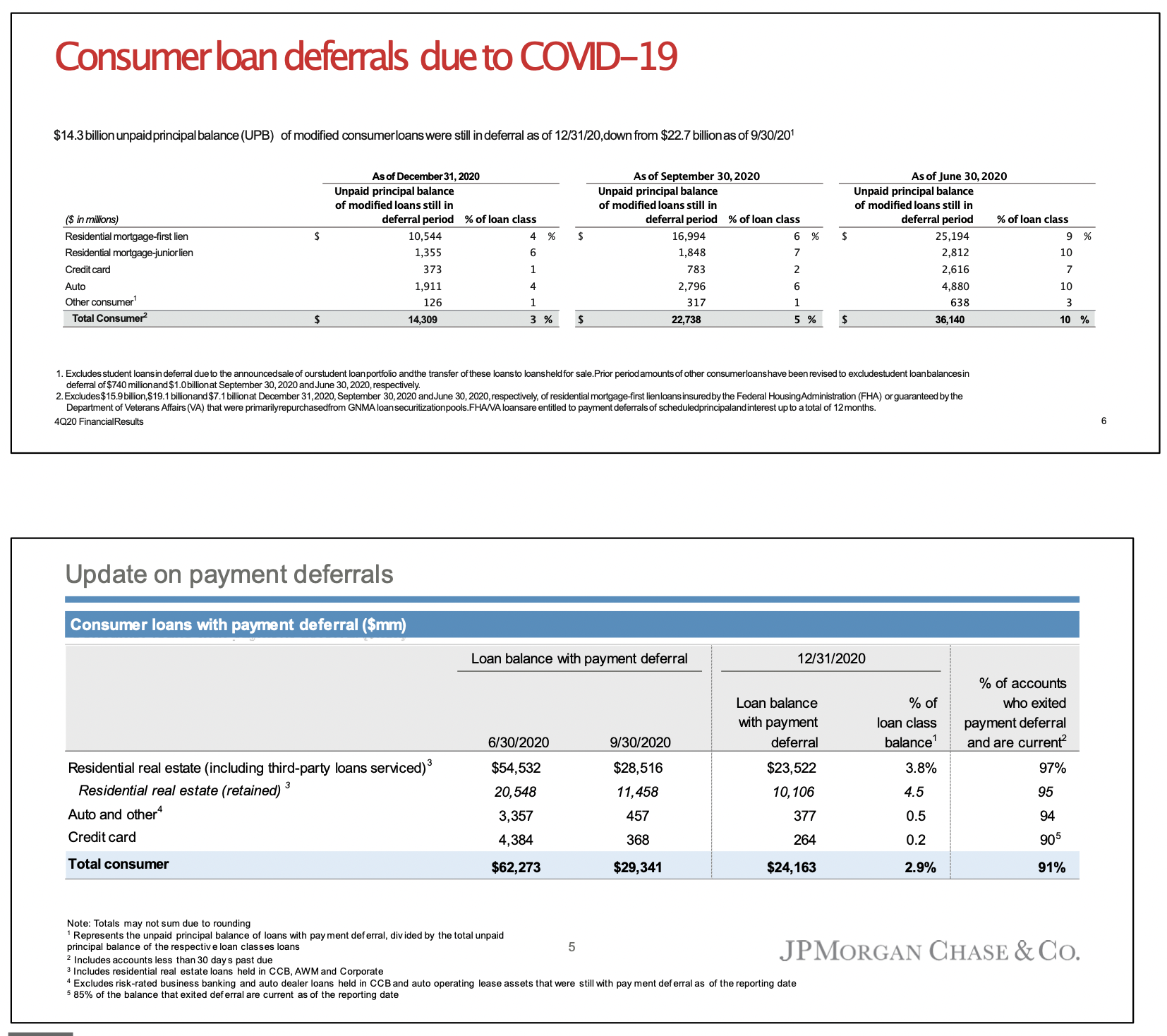
Analysis of deferral activity is the best way to predict potential losses. Unfortunately most banks provide limited disclosure. Both Wells Fargo and Chase provide deferral information only on their consumer portfolios. For both, residential loans still in deferral amount to only 4 percent of their portfolios. Credit card deferrals are de minimis, 1 percent for Wells and 0.2 percent for Chase, down from June highs of 7 percent and 3 percent respectively. More to the point, Chase discloses the performance of loans that have exited deferral, likely with payments added to principal balance rather than paid in full or forgiven: 97 percent of mortgages are now current, as are 90 percent of credit card accounts, or 85 percent by balance. It appears that deferrals are no longer masking credit risk. Unfortunately modifications are not reported, and that is where heightened credit risk is hidden.
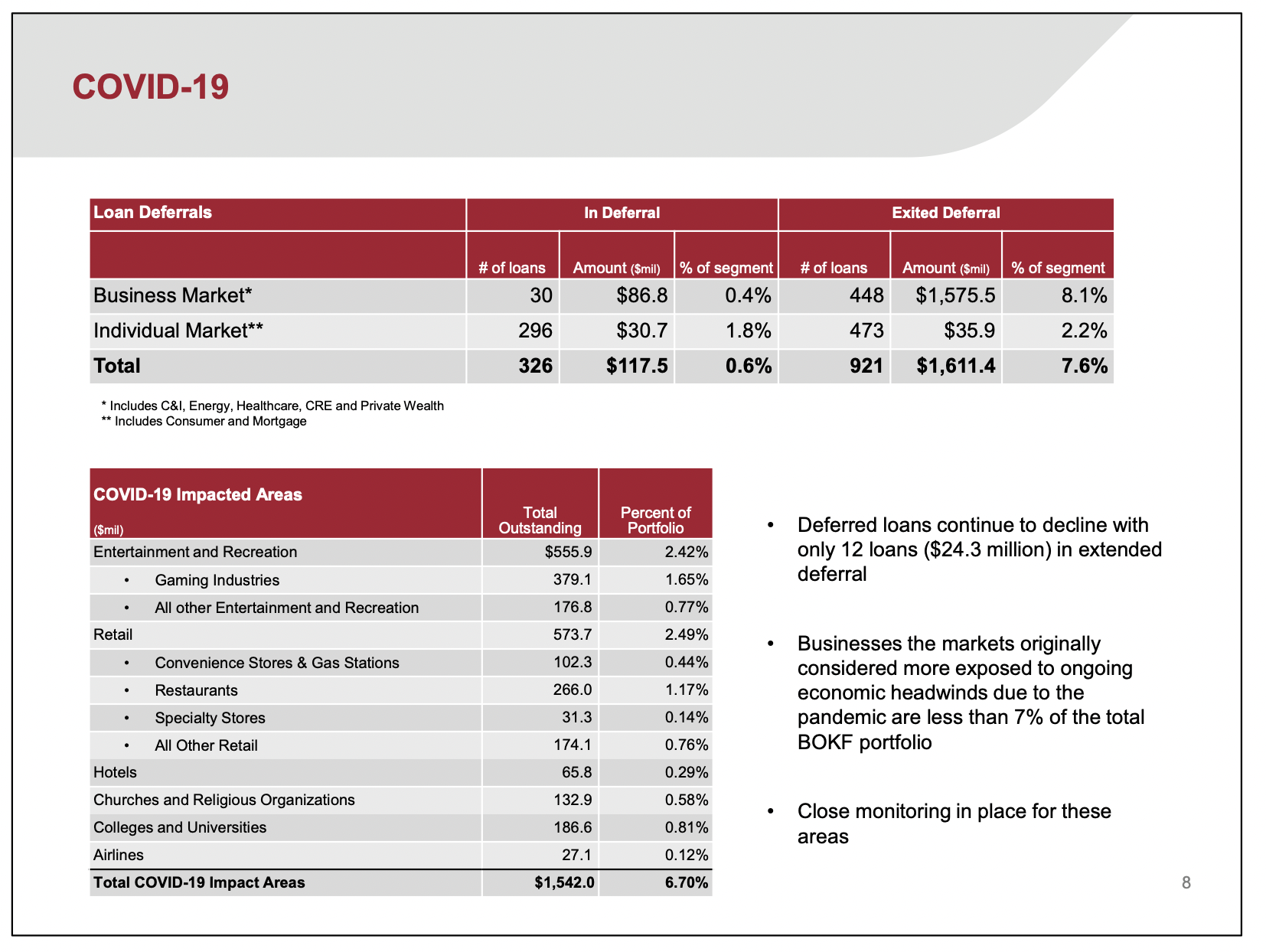
Deferrals have also been used to manage commercial loans. While none of the mega-banks provide information about commercial loan deferrals, some smaller banks provide insight into market norms. Bank of Oklahoma provides data on consumer and commercial deferrals, with a lower amount than Chase and Wells at 1.8 percent, likely mostly mortgage, but only 0.4 percent of commercial loans in deferral. As tough economic conditions continue, it will be worth watching for deferrals or refinancings of commercial and industrial and commercial real estate loans that would normally be classified as troubled debt restructurings. Exiting a deferral with a modification simply pushes the credit risk into the future.
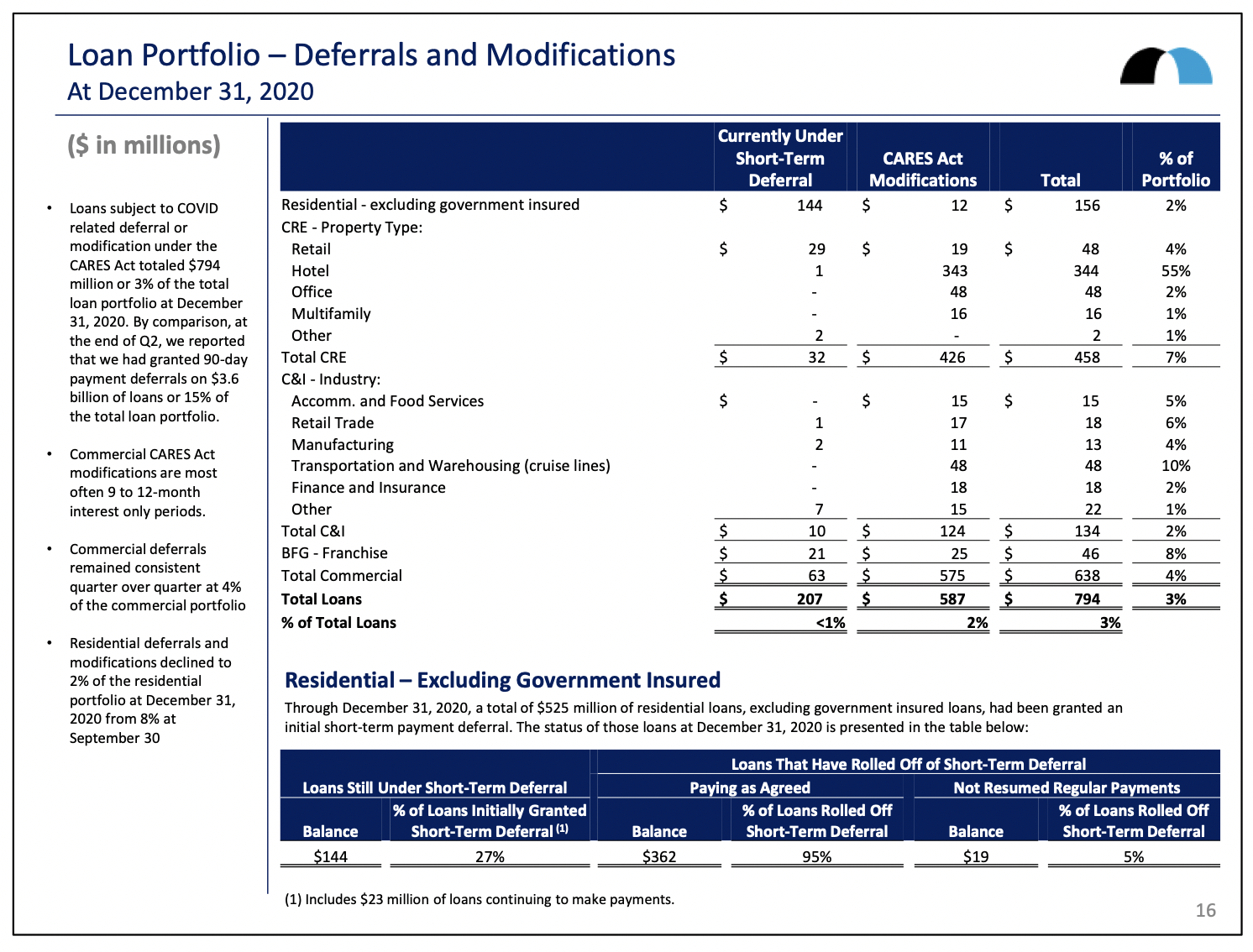
Instead of deferrals, some banks have modified loans under the CARES Act. Like Bank of Oklahoma, BankUnited provides more granular data on deferrals, but it also provides data on CARES Act modifications by industry segment within commercial real estate and commercial and industrial. A majority, 55 percent, of its hotel loans were modified pursuant to the CARES Act. At $344 million this constitutes about 5 percent of BankUnited's commercial real estate portfolio. BankUnited's actions are commonplace in the current environment. The difference is that they reported it.
Summary
The biggest takeaways from this quarter's earnings releases are that digital banking is here to stay. Community banks must develop and execute a digital strategy or risk losing customer relevance. Changes in fee income by type demonstrate that shifting payment patterns are already having a material impact on the bottom line.
The second key issue is credit performance during the pandemic. Banks took unusually large provisions in the first and second quarters of 2020 only to reverse some of that in the fourth. Analysis of deferral activity would suggest there have not been material changes to the credit quality of portfolios. That said, CARES Act modifications and other borrower-friendly initiatives may be masking performance, making it impossible to determine true expected losses. As a result, it is not yet possible to assess credit damage in bank portfolios.